

Blog

Musings on the Mean Kid

boy s face gray scale photo
Photo by Pixabay on Pexels.com

In my line of work, I speak with a lot of kids.  Little kids.  Big kids.  Kids with no parents.  Kids with two parents.  Kids with anger.  Kids who are depressed.  Happy kids.  Sad kids.  You get it.  The number and variation of kids I get to talk to is deep and wide.  It seems, though, that more often than not, I’m talking to kids about someone who is “mean.”  Unfortunately, the majority of those mean people are kids.

What is it with mean kids?  I remember “bullies” when I was in school.  You know, the giant kid on the playground that everyone knew not to mess with.  The one who stomped around, taunting everyone else with their size and brute strength.  All of that has changed, though.  Now, the mean kid looks unsuspecting.  They can be well-dressed and are possibly a professional meanness hider.  Heck, they may even be the class favorite.  Many of the kids I talk to report that the mean kid often acts as though they are their friend, playing with them at recess and sitting with them at lunch.  Then, like a rogue wave out of nowhere, the meanie has ostracized them and is hurling insults their way.

So what gives?  What’s the deal with these kids and their crooked halos?  As you can imagine, in my repertoire of pep talks, many have also been given to the mean kids.  In my journey with them, I’ve found that many (if not all) of them have suffered trauma or unfortunate circumstances of some kind.  Maybe they are verbally, emotionally, mentally or physically abused by a caretaker.  Perhaps they’ve witnessed a highly volatile marriage and/or divorce.  It could be that one or both of their parents suffers from mental illness or drug/alcohol abuse.  Whatever their story, we usually find that the mean kid is acting out in some way.  In therapy, I often use the phrase “hurt people hurt people.”  That is a concept that can effectively be applied in the situation of the mean kid.

Am I excusing these poor choices and unkind human behavior?  Not at all, not in the least bit.  What I’m saying, especially to you moms and dads who are currently walking through the misery of the mean kid with your own son or daughter is this: keep letting your baby talk to you.  Keep listening when they feel sad.  Give them advice and teach them how to stand up for themselves.  Never give up on teaching your child how to be the best version of themselves.  Constantly model appropriate behavior in friendships, relationships, and life in general.  They ARE watching and always learning from you.  Remind them about compassion and kindness.  Help them understand that not all kids grow up with a mom or dad who teaches them right from wrong, who loves them big and speaks to them in loving tones.  Encourage them to be a good friend to everyone – even the mean kid.  Help them see that this one day/month/school year is only temporary and that someday, they’ll move on from this place where the mean kid destroys their day with just a few words.  In the stillness of tucking them into bed, kiss their little cheeks and quietly whisper how much you love them, believe in them and know for a FACT that they are the best kid in the whole wide world. ♥♥♥
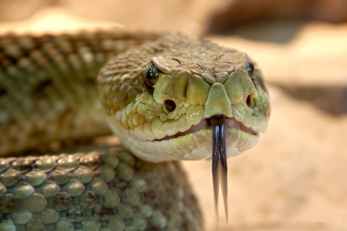
Charming the Rattlesnake

dry animal gift dangerous
Photo by Pixabay on Pexels.com

Arrogant.  Negative.  Condescending.  Argumentative.  Rude.  We all have encountered people with these characteristics.  Maybe you deal with a person who fits these descriptions on the daily.  Interacting with difficult people is unavoidable, but there are some sure-fire ways to keep your wits about you when you do.  Here are five tips for dealing with the most difficult people…

1.  Keep a positive mindset.  Difficult people are more often than not some of the most negative humans on earth.  No matter what sunshine and rainbows you toss their way, they can find the storm and rainclouds within.  Keeping a positive attitude will help you not to be dragged down into the muck and mire with them.  It will also help deter their negative comments.  For every negative reaction they give, if you have something positive to counter with, they will eventually be worn down or give up.  So, my friend, keep smiling and just go on about your business.

2. Be unaffected.  Some difficult people get a secret pleasure in watching others squirm. They poke the bear to see how long it takes to get him riled up.  The remedy for this, albeit tough as nails to accomplish, is to not get riled up!  Whether you have to practice deep breathing exercises, go to your zen place or simply walk away, the more unaffected you can be, the better.

3. Choose your words wisely.  My momma always said “if you don’t have anything nice to say, don’t say it at all.”  Boy is this statement true for dealing with people who have the personality of a rattlesnake.  Because difficult people are also easily provoked, be mindful in the words you speak and tone of voice you choose.  In no way does that mean you can’t speak your mind.  Rather, speak with eloquence and dignity.  Don’t give Oscar the Grouch a reason to bite your head off.  If he does, though, see tips 1 and 2.

4. Keep your emotions in check.  Want to know the best way to lose a battle with a difficult individual?  Scream, cry, yell and have a complete meltdown.  Trust me, they won’t feel compassion for you if this happens.  They’ll walk back to their office (or wherever their space may be) with their chest bowed out, beaming with pride.  After all, they won the game.  They accomplished their intended purpose – to prove their point and shut down your argument.  When things get heated, or when you feel your stress level rising, take a moment to ask yourself “is this fight worth my emotional/mental health right now?”  If the answer is no, agree to disagree with the person and shut them down before you lose your cool.

5. It’s not you – it’s them!  I can’t stress this one enough.  Most difficult people are dealing with some sort of battle within themselves.  They might have a low self-worth.  They might have marital issues going on at home.  They may be grieving (yes, even if the loss happened 20 years ago).  They may have chronic pain.  They may have suffered a major trauma at some point in their life.  The list could go on and on as to the reasons why people are grouchy, irritable and just plain mean.  When all else fails, remind yourself over and over that people are like icebergs – we only see their life for what is on the surface, and what is below the surface is incredibly deep.

Dealing with difficult people is a part of life.  It doesn’t have to be something that affects us to the point of tears or undo stress.  The only control we have is over our own self and how we react to others.  Not to mention, at some point, we can all be a little difficult ourselves. ♥♥♥

Mirror, Mirror

woman holding mirror against her head in the middle of forest
Photo by Tasha Kamrowski on Pexels.com

Welcome to the selfie age, where the more pictures people take of themselves, the less genuine their identity becomes.  Social media has been a wonderful addition to the world, in the sense that it connects people and allows us to share our lives with the ones we love.  Unfortunately, though, social media has also caused many to disconnect from their true identities in order to form a more desirable one.  We post about our “perfect” marriages, kids, careers, vacations and much more.  Sadly, many of these posts are empty and devoid of the true picture of what our lives actually are.

Self-reflection has always been the path to our most genuine self.  Pages upon pages exist of the diaries of great leaders like George Washington and Abraham Lincoln.  In their entries, we are able to experience their triumphs, their heartaches and their innermost battles with themselves.  The Diary of Anne Frank is one of the most renowned pieces of literature from the 20th century because of it’s real, raw, personal account of tragedy.  These are only a few examples of historical figures who spent a great deal of time soul searching and in self-discovery.

So why, now, in an age where knowledge abounds at our fingertips, do we shy away from knowing the most intimate subject — ourself?  Perhaps knowing one’s self is too much work. It takes time, patience, and often heartbreak to discover who we truly are.  Maybe knowing ourselves is too frightening.  When we start to explore the innermost working of our hearts and minds, we are likely to find ghosts and demons that have haunted us for years.  Then there is the question of whether or not we actually WANT to know our true self.  If we are able to manufacture an image online that is desirable, funny, tough, what have you, then we are able to protect ourselves from judgment, loneliness and imperfection….or so we think.

Thales once said “the most difficult thing in life is to know oneself.”  Self-reflection is one of the hardest courses in the school of life we will ever attempt.  Mastery is usually never achieved.  Like my mom used to always tell me, though, it doesn’t matter how well you do as long you at least tried.  So where do we start?  How do we embark on the journey of self discovery?  For this answer, we turn to another philosopher.  Lao Tzu coined the famous phrase “the journey of a thousand miles begins with a single step.”

The minute we begin to be mindful of our thoughts, feelings, actions and words, we take that giant leap into self-reflection.  Spend time each day observing the little quirks that make you unique.  Ponder the annoyances that get under your skin. Determine your likes, dislikes, values and beliefs.  Self-Reflection won’t happen overnight.  There is a reason that wisdom comes with age.  Journal your experiences, your hopes, your dreams, your letdowns.  When you look back on all of these occurrences in your life, determine where you’ve grown, where there’s room for growth and what has shaped you thus far.  Begin to wean yourself from the artificial experiences that are so easy to create online. I encourage you to begin seeing yourself for the beauty that you truly are, not for the social media filter you can create.  ♥♥♥

What’s Eating You??

brown potato in front of french fries
Photo by Pixabay on Pexels.com

French fries and Dr. Peppers are my weakness.  When placed in front of me, I can’t resist a box of hot, freshly made, greasy French fries.  Don’t get me started on Dr. Pepper.  If I have just one, I end up falling off the wagon and craving more and more for days upon end afterward.  It turns, out, there is an increasing amount of science behind the food we eat, the cravings we have and the brain chemistry tied to it all.

Studies are starting to suggest that when we eat processed foods and refined sugars, the same parts of our brains light up as those of heroin users.  You heard that correctly…heroin.  It makes sense, too.  Thousands upon thousands of people struggle every day with weight loss and food-related disorders.  Obesity, especially in children, is on the rise at the rate of a speeding freight train.  Those without prior knowledge in psychology might simply say “they just need to quit eating so much.”  Unfortunately, it’s not that simple.  Food addiction is real and is extremely difficult to overcome.  Think about it.  Food is the one “drug” our bodies cannot live without.  We can’t quit eating cold-turkey like we could if we smoked cigarettes.

For many individuals and families, food is also tied to emotional events like births, deaths, celebrations and disasters.  I’m from the south and anytime anything happens in my life or the life of a friend, someone is bound to bring a casserole and a homemade pie or two.  Food is a beautiful way to show love and care, which is another reason it is so hard for us to keep our eating habits in check.

So what can we do to avoid falling off the food cliff?  I try to encourage people (including myself) to follow the 80/20 rule.  80% of what we eat in a meal or in a day should be clean, healthy food.  Our plates should always contain color — especially green — in order for our brains to thrive and be the best they can be.  20% of our food can be something we enjoy (and I’m talking about dairy products, whole grain carbs, etc.), while also limiting processed, refined “junk” (i.e. white carbs & sugary treats).  Keep in mind when eating processed foods like cookies, chips, candy and breads that the chemicals in these foods are going into our mouths and straight to our brains.  In turn, our brains crave more and more of these foods.  It’s a never-ending cycle.  In a previous post, I discussed mindfulness.  Being mindful of our eating habits can save us from a lot of the pitfalls we so desperately try to avoid in our food choices.  The other two pieces of the puzzle are one that I struggle with daily: water and exercise.  Our bodies are more than 75% water.  If we aren’t rehydrating our cells, muscles and blood, they are sputtering along like a car running on empty.  I can’t stress enough how much water intake affects our physical and mental health.  There is no need to stress the importance of exercising and movement in our daily life.  For decades now, we’ve seen countless amounts of research devoted to showing the positive impacts exercise has our on physical, mental and emotional health.  You don’t have to become a body builder, either.  Go for a walk each day.  Run through the sprinkler and climb trees with your kids.  Do something to get your body moving and your endorphins up.  Your brain and your mood will thank you.

Don’t get me wrong.  I am definitely NOT the poster child for physical fitness or the president of the health nut club.  Like you, I struggle daily to make good choices for my body.  When I don’t, though, I notice a marked difference in my mood, energy level and emotional status.  It’s the days that I’m consistently eating clean food, journaling what goes into my mouth, drinking lots of water and getting my steps in that I notice how much better I feel.  The same can happen for you.  Small changes.  One day at a time.  You’ll eventually start to notice how much better, stronger and happier you feel. ♥♥♥

The Hardest Word

close up photography of a baby
Photo by Alexander Dummer on Pexels.com

This might sting a little.  It may even step on your toes, but it’s for your own good.  Actually, it’s for your child’s own good.  Parents, repeat after me: “No”.  Say it again, “No”. Such a simple, small little word, yet so hard for so many parents to say.    I’m as guilty as the next mom or dad.  It’s hard to say no these days…to anything, especially our kids.  We live in a world that promotes instant gratification at every turn.  Entertainment can be found at the push of a button.  Food can be prepared as quickly as a person can say “please pull to the first window.”  It’s no wonder we’ve lost our ability as parents to make our kids wait, or even (GASP!) do without.

I have an influx of parents that I’ve worked with over the last several years who have extreme difficulty saying no to their kids.  Countless times I’ve heard “I can’t take their cell phone away…..they’ll get mad at me” or “I just give in so he/she doesn’t throw a fit.”  I can hardly blame them, though.  Have you seen the gadgets and designer duds children and adolescents are wearing these days?  We buy our kids the latest and greatest out of fear that they’ll be bullied or picked on or hate us.  Sometimes, saying yes is so much easier than saying no.  We’re tired, stressed out and don’t have the energy to fight one more battle in our already stretched thin day.  I get it….BUT….it’s ruining our kids.  Yes, I said it.  Our kids are being spoiled and set up for complete failure in their once bright futures.

The affects of not saying no (sorry for the double negative) can now be seen with a vengeance in the modern workforce.  Kids that were always told yes to any and every whim they ever had are extremely difficult to manage and direct.  Ask any CEO of any size company and they’ll tell you — the number one “skill” they wish college grads had these days is the ability to take guidance and direction.  Unfortunately, there is so much amazing potential that goes unused because spoiled adults want to be rich, famous and the boss of everything and they want it RIGHT. NOW.

So what can we do to prevent this unbecoming characteristic from taking over our kids? First and foremost, we must tell ourselves every single day (maybe even every single hour) that we are our child’s PARENT, not their best friend, not their buddy, not their number one homie.  There’ll be plenty of time for friendship with our kids once they are grown and living productive lives on their own.  For now (or at least between the ages of 0 and 18), we must set boundaries and limits.  This means they might really dislike you at times.  That’s okay…they’ll get over it.  It means they might throw a fit or two.  That’s okay…you’ll get past it.  Whatever you do, it’s important to show your child that they are not the boss of your house, and that everyone (including you) is not subject to their demands.  The next valuable thing we can do for our kids is give them chores and other responsibilities.  Make them earn the newest toy or gadget they want so badly.  Giving kids chores not only teaches them responsibility, it also helps them learn pride and self-confidence for a job well done.  Finally, we must always remind our kids that we love them, but we will not allow them to become little Napoleon Bonapartes.  Keep open communication with your kids about why they can’t have more screen time or why they can’t eat chocolate cake for breakfast.  Reinforce that you want what is best for them not only now but when they are adults, which is why you have to tell them no.  It’s even okay for you to say something like “it makes me sad that you can’t have the whole box of Chewy Chips Ahoy, too, dear…but it would make me even more sad to see you lose all of your teeth to cavities.”

Parenting is hard.  Parenting in the new millennium is downright daunting.  I can with 98% certainty guarantee (nothing is 100% guaranteed, right?) that you will thank yourself for learning that tiny, two letter word and committing it to your parental vocabulary.  You know who else with thank you?  Your child’s teachers, coaches, friends’ parents, future college professors, future bosses and future spouses.  Most importantly — maybe not today or tomorrow or next week — one day, your child will thank you! ♥♥♥